
Apr . 09, 2026 02:05 Back to list
Choosing the Best High Quality Nissan Pickup Brake Drum for Safety
The Ultimate Guide to Choosing the Right Nissan Pickup Brake Drum
When it comes to the safety and performance of your vehicle, the braking system is the most critical component. For owners of rugged utility vehicles, selecting a high-quality nissan pickup brake drum is essential to ensure reliable stopping power, especially when hauling heavy loads or navigating challenging terrains. A worn-out brake drum can lead to increased stopping distances and reduced vehicle control. In this comprehensive guide, we will explore everything from material composition to maintenance tips, helping you make an informed decision for your vehicle's longevity and your own safety on the road.
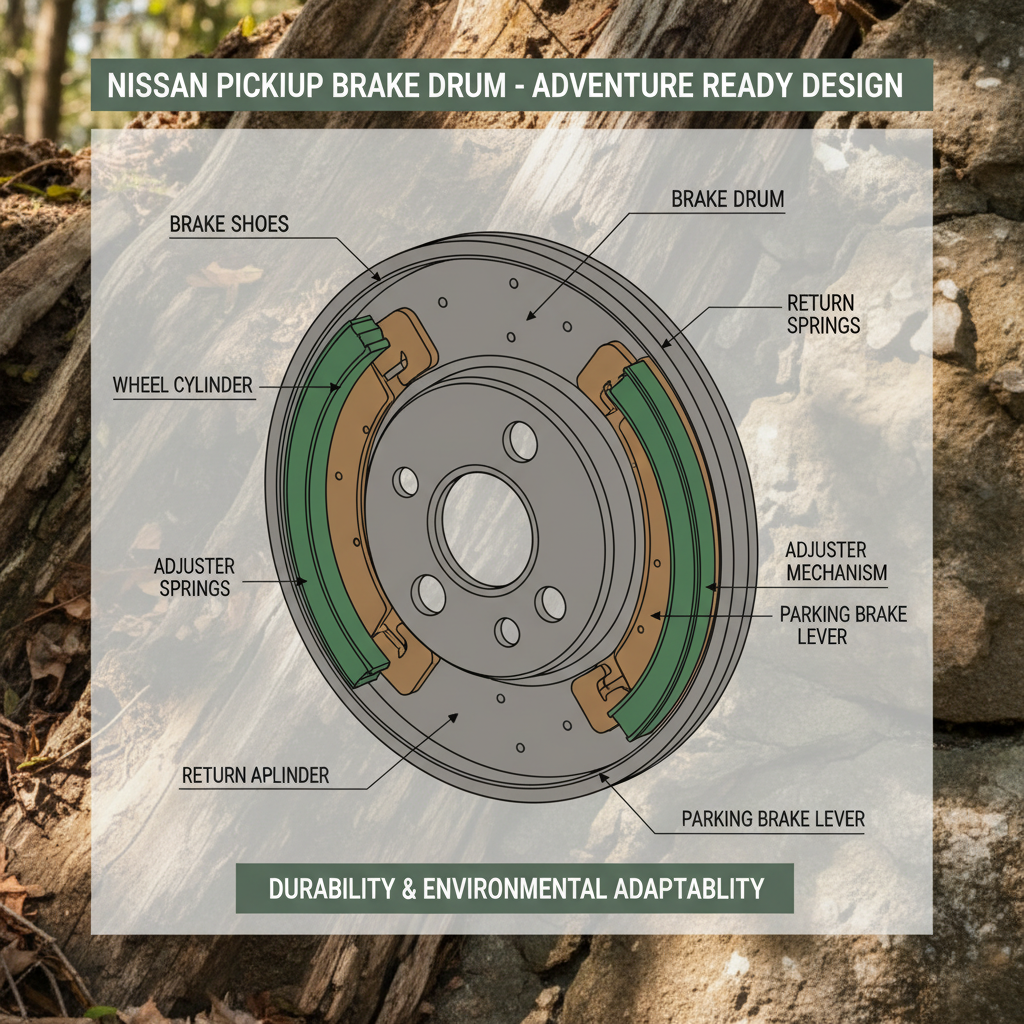
The Importance of High-Quality Nissan Pickup Brake Drum Materials
Not all brake drums are created equal. The material used in a nissan pickup brake drum directly affects its heat dissipation and wear resistance. Most premium drums are crafted from high-grade cast iron or alloy steel to withstand the extreme friction generated during braking. Thermal stability is key; if a drum cannot dissipate heat quickly, it may warp or lead to "brake fade," where the braking efficiency drops significantly during prolonged use. By choosing components with precise metallurgical compositions, drivers can ensure a smoother pedal feel and a longer service life for their brake shoes.
Pro Tip: Always check for a smooth internal surface finish. A precision-machined surface reduces initial bedding-in time and minimizes noise during the first few hundred miles of use.
Signs You Need to Replace Your Brake Drum
Identifying wear and tear early can prevent costly repairs and dangerous road incidents. If you notice a pulsating sensation in the brake pedal, it often indicates that the nissan pickup brake drum has become oval or warped. Other common warning signs include loud grinding noises, a "spongy" feel when braking, or the vehicle pulling to one side. Since pickup trucks often carry heavy cargo, the stress on the rear drums is significantly higher than in passenger cars, making regular inspections every 10,000 to 15,000 miles a necessity for safety compliance.
Nissan Pickup Brake Drum Specifications Comparison
Depending on the model year and the specific trim of your Nissan pickup, the dimensions and specifications of the brake drum will vary. It is crucial to match the inner diameter and mounting holes exactly to avoid installation failure. Below is a comparison of standard versus performance-grade options for a typical nissan pickup brake drum to help you decide which fits your driving habits.
Installation Tips for a Nissan Pickup Brake Drum
Proper installation is just as important as the part itself. When replacing your nissan pickup brake drum, ensure that the hub surface is perfectly clean and free of rust. Any debris trapped between the hub and the drum can cause "run-out," leading to pedal vibration. We highly recommend replacing brake shoes and wheel cylinders at the same time as the drum to ensure a balanced system. Finally, apply a small amount of high-temperature lubricant to the contact points of the brake shoes to prevent squealing.
Technical Specs and Quality Standards
To ensure maximum safety, a professional nissan pickup brake drum must adhere to strict ISO and SAE standards. This includes precise tolerances for the inner diameter to ensure a perfect seal with the brake shoes and rigorous stress testing to prevent cracking under heavy loads. The following table outlines the technical benchmarks for premium replacement drums.
Conclusion: Prioritize Safety with the Right Brake Drum
Maintaining your vehicle's braking efficiency is non-negotiable. A high-quality nissan pickup brake drum not only ensures shorter stopping distances but also provides peace of mind during heavy-duty hauling. By paying attention to material quality, following professional installation steps, and adhering to regular maintenance schedules, you can significantly extend the life of your truck. Invest in quality parts today to ensure a safer tomorrow on the road.
Frequently Asked Questions (FAQs)
Can I just resurface my old Nissan pickup brake drum instead of replacing it?
Resurfacing (or machining) is possible if the drum is only lightly scored and still meets the minimum thickness specifications set by the manufacturer. However, if the drum is warped, cracked, or has reached its wear limit, resurfacing will not fix the underlying structural issues. In most cases, especially for vehicles used for heavy hauling, replacing the nissan pickup brake drum is the safer and more cost-effective long-term solution, as it restores the full thickness and integrity of the braking surface.
How often should I check my brake drums for wear?
For standard driving conditions, a visual inspection every 10,000 to 12,000 miles is generally sufficient. However, if you frequently use your pickup for towing, off-roading, or operating in mountainous areas, you should inspect the drums every 5,000 to 8,000 miles. Look for signs of deep grooves, heat spots (blue discoloration), or thinning walls. Regular maintenance ensures that your nissan pickup brake drum remains within safe operational limits.
Why is my new brake drum making a squeaking noise?
Squeaking after installation is often caused by "brake chatter" or a lack of proper lubrication on the brake shoe contact points. It can also occur during the "bedding-in" period where the new shoe material is conforming to the surface of the nissan pickup brake drum. If the noise persists after a few hundred miles, it may indicate an alignment issue or poor-quality brake shoes. We recommend checking the spring tension and ensuring that all components are seated correctly.
What is the difference between OEM and aftermarket brake drums?
OEM (Original Equipment Manufacturer) drums are made to the exact original specs of the vehicle. High-quality aftermarket drums, like those found at JKXYIHANG, often provide similar or even superior performance by using enhanced materials (like high-carbon iron) to improve heat dissipation. The main difference is usually price and specific performance enhancements. As long as the aftermarket part meets ISO/SAE standards, it is a reliable choice for your Nissan pickup.
-
Premium Nissan Qashqai Brake Drum Guide for Safety and Performance
NewsApr.16,2026
-
Choosing the Best High Quality Nissan Pickup Brake Drum for Safety
NewsApr.09,2026
-
Comprehensive Guide to Nissan Patrol Brake Drum Maintenance and Replacement
NewsApr.07,2026
-
Comprehensive Guide to Nissan Versa Brake Drums Function and Replacement
NewsApr.04,2026
-
Comprehensive Guide to Nissan Cube Brake Drum Function and Replacement
NewsMar.31,2026
-
Comprehensive Guide to Nissan Brake Drums Performance and Maintenance
NewsMar.28,2026
 Afrikaans
 Albanian
 Amharic
 Arabic
 Armenian
 Azerbaijani
 Basque
 Belarusian
 Bengali
 Bosnian
 Bulgarian
 Catalan
 Cebuano
 Corsican
 Croatian
 Czech
Czech
 Danish
 Dutch
Dutch
 Esperanto
 Estonian
 Finnish
 French
 Frisian
 Galician
 Georgian
 German
 Greek
Greek
 Gujarati
 Haitian Creole
 Hausa
Hausa
 Hawaiian
 Hebrew
 Hindi
Hindi
 Miao
Miao
 Hungarian
 Icelandic
 Igbo
Igbo
 Indonesian
 Irish
Irish
 Italian
 Japanese
 Javanese
 Kannada
 Kazakh
 Khmer
Khmer
 Rwandese
 Korean
 Kurdish
 Kyrgyz
 Lao
Lao
 Latin
Latin
 Latvian
 Lithuanian
 Luxembourgish
 Macedonian
 Malgashi
 Malay
Malay
 Malayalam
 Maltese
 Maori
Maori
 Marathi
 Mongolian
 Myanmar
 Nepali
 Norwegian
 Norwegian
 Occitan
 Pashto
 Persian
 Polish
 Portuguese
 Punjabi
 Romanian
 Russian
 Samoan
 Scottish Gaelic
 Serbian
 Sesotho
 Shona
Shona
 Sindhi
 Sinhala
 Slovak
 Slovenian
 Somali
 Spanish
 Sundanese
 Swahili
 Swedish
 Tagalog
 Tajik
Tajik
 Tamil
Tamil
 Tatar
Tatar
 Telugu
 Thai
Thai
 Turkish
 Turkmen
 Ukrainian
 Urdu
Urdu
 Uighur
 Uzbek
Uzbek
 Vietnamese
 Welsh
Welsh
 Bantu
Bantu
 Yiddish
 Yoruba
 Zulu
Zulu
 English