
Sep . 19, 2025 16:25 Back to list
Durable Nissan Brake Drum | OEM Quality & Superior Stopping Power
Industry Trends and Market Dynamics for Braking Components
The global market for commercial vehicle braking systems is experiencing significant evolution, driven by stringent safety regulations, increasing payload capacities, and the demand for enhanced operational efficiency. Manufacturers and fleet operators are constantly seeking components that offer superior durability, consistent performance, and extended service intervals. In this demanding environment, the nissan brake drum stands out as a critical component, engineered to meet the rigorous demands of Nissan's diverse commercial vehicle fleet, from heavy-duty trucks to urban transit buses. Trends indicate a shift towards advanced material science for improved heat dissipation, precision machining for better balance, and robust quality control for unparalleled reliability. The focus is on reducing total cost of ownership through components that minimize downtime and maintenance needs, while ensuring optimal safety under varying operational conditions.
Key drivers include the expansion of logistics and e-commerce, which mandates more frequent and heavier loads, and growing infrastructure projects requiring reliable heavy machinery. Consequently, the demand for high-performance brake drums that can withstand continuous thermal cycling and mechanical stress is higher than ever. Integration with advanced driver-assistance systems (ADAS) also places new demands on the reliability and responsiveness of mechanical braking components, emphasizing the need for precision-engineered solutions. Furthermore, the push for environmental sustainability is driving innovations in lighter materials and manufacturing processes that reduce the carbon footprint, without compromising on safety or performance.
Detailed Manufacturing Process of the Nissan Brake Drum
The production of a high-performance nissan brake drum involves a sophisticated multi-stage manufacturing process, meticulously designed to ensure superior quality, durability, and operational safety. This process integrates advanced metallurgy with precision engineering to produce components capable of withstanding extreme conditions inherent in commercial vehicle applications.
1. Material Selection and Preparation
- Material: High-grade grey cast iron, typically conforming to ASTM A48 Class 30/35 (equivalent to EN-GJL-200/250 or HT250), is selected for its excellent thermal conductivity, wear resistance, and damping characteristics. Specific alloying elements like Chromium (Cr) and Molybdenum (Mo) are often introduced to enhance strength and heat fade resistance.
- Metallurgical Analysis: Incoming raw materials undergo rigorous spectral analysis using Optical Emission Spectrometry (OES) to verify chemical composition, ensuring compliance with stringent specifications and predicting performance characteristics.
2. Casting Process (Sand Casting)
- Mold Preparation: Precision sand molds are prepared using automated molding lines, often employing green sand or resin-bonded sand processes, to ensure dimensional accuracy and consistent surface finish.
- Melting and Pouring: Molten grey cast iron is prepared in induction furnaces, with precise temperature control and ladle inoculation for microstructural refinement. The metal is then poured into the prepared molds under controlled conditions to prevent defects like cold shuts or gas porosity.
- Controlled Cooling: After pouring, the castings are subjected to a carefully controlled cooling process. This critical phase dictates the microstructure of the cast iron, influencing its mechanical properties such as hardness, tensile strength, and resistance to thermal cracking and distortion.
- Fettling and Shot Blasting: Once sufficiently cooled, the raw castings are removed from the molds, and risers, gates, and flash are meticulously removed through fettling. This is followed by shot blasting to clean the surfaces, remove scale, and improve surface integrity, preparing the component for subsequent machining.
3. CNC Machining
- Precision Turning and Boring: Advanced multi-axis CNC (Computer Numerical Control) machining centers are utilized to turn the brake drum to precise dimensions. This includes the inner braking surface diameter, hub bore, flange face, and overall height. Tight tolerances (e.g., ±0.05 mm for critical dimensions, and 0.02 mm for brake surface run-out) are maintained to ensure optimal fitment, smooth operation, and consistent braking performance.
- Drilling and Tapping: Bolt holes and any necessary mounting features are precisely drilled, reamed, and tapped to ensure secure attachment to the wheel hub.
- Dynamic Balancing: Each finished drum undergoes dynamic balancing on specialized machines to minimize vibrations and ensure smooth rotation at operational speeds. Imbalances are precisely detected and corrected by controlled material removal, adhering to standards like ISO 1940-1 Grade G10.
4. Surface Treatment and Finishing
- Corrosion Protection: Depending on application and customer requirements, drums may receive protective coatings such as anti-corrosion paints, e-coatings, or specialized thermal coatings. These treatments enhance resistance to rust, road salt, and environmental degradation, particularly crucial in harsh operational environments and for extending shelf life.
5. Quality Control and Testing Standards
- Dimensional Inspection: 100% inspection of critical dimensions using advanced Coordinate Measuring Machines (CMM) and other precision instruments, verifying adherence to blueprints and CAD models.
- Material Hardness: Brinell hardness testing (HB) on the braking surface to ensure optimal wear characteristics (typically 180-240 HB) and consistent friction.
- Crack Detection: Non-destructive testing (NDT) methods, such as Magnetic Particle Inspection (MPI) or Eddy Current testing, are employed to detect any surface or sub-surface cracks that could compromise structural integrity.
- Performance Testing: Sample drums undergo rigorous dynamometer testing to simulate real-world braking conditions, evaluating thermal stability, friction coefficient consistency, resistance to fading, and overall fatigue life.
- Compliance: All manufacturing processes and products adhere to international quality management standards such as ISO 9001 and IATF 16949 (specifically for automotive), as well as relevant SAE (Society of Automotive Engineers) and ANSI standards for braking components.
Service Life and Target Industries: The meticulous manufacturing process ensures an extended service life for the nissan brake drum, typically ranging from 150,000 to 300,000 kilometers depending on driving conditions, load, and maintenance. These drums are specifically designed for target industries including heavy-duty logistics and trucking, public transportation (buses), municipal service fleets, and specialized industrial applications such as petrochemical transport, metallurgy operations, and water supply & drainage vehicles. Advantages include enhanced energy saving through optimized design and reduced mass where applicable, superior corrosion resistance due to high-quality material and optional coatings, and demonstrably improved safety margins in diverse operational scenarios.
Technical Specifications and Performance Parameters
Our nissan brake drum components are engineered to precise technical specifications to ensure optimal compatibility and performance across various Nissan commercial vehicle platforms. The following table outlines typical parameters that underscore the quality and reliability of these critical braking parts, highlighting our commitment to engineering excellence and component longevity.
These specifications are crucial for ensuring components that offer predictable and reliable braking performance, contributing directly to vehicle safety and operational longevity. Our commitment to these parameters reflects our dedication to engineering excellence and compliance with stringent industry benchmarks. Adherence to these precise standards minimizes vibration, reduces uneven wear, and provides a stable braking platform essential for commercial vehicle safety.
Application Scenarios and Industry Relevance
The versatility and robust construction of the nissan brake drum make it indispensable across a spectrum of demanding commercial applications. Its design is optimized for environments where consistent braking power, thermal stability, and prolonged service life are paramount, directly addressing the operational challenges faced by various industries.
- Heavy-Duty Logistics & Freight: Used extensively in long-haul trucks and regional delivery vehicles that operate under continuous heavy loads and diverse road conditions. The drums provide reliable stopping power, minimizing fade on steep descents and ensuring safety during frequent stops in urban settings, critical for time-sensitive deliveries.
- Public Transportation (Buses): Crucial for city and intercity buses, which experience a high number of stop-and-go cycles daily. The drums' thermal resistance and durability are vital for maintaining passenger safety and reducing maintenance intervals in high-wear scenarios, directly impacting fleet uptime and operational budgets.
- Construction & Municipal Vehicles: Applied in dump trucks, refuse vehicles, and utility trucks that often operate off-road or in arduous conditions. Their robust construction resists damage from debris and environmental exposure, ensuring consistent performance even in environments with high levels of dust, mud, or moisture.
- Specialized Industrial Equipment: Integrated into vehicles used in industries such as petrochemical, metallurgy, and water supply & drainage, where equipment operates in corrosive or extreme temperature environments. The enhanced corrosion resistance and material integrity are key advantages, protecting against chemical degradation and extreme heat fluctuations.
In each scenario, the reliability of the braking system directly impacts operational efficiency, fleet safety ratings, and overall maintenance costs. The precise engineering of these brake drums ensures they meet or exceed OEM performance requirements, offering a dependable solution for critical commercial vehicle fleets that prioritize safety and longevity.
Key Technical Advantages
The design and manufacturing superiority of our nissan brake drum products offer several distinct technical advantages critical for B2B clients, translating into enhanced performance, safety, and cost-efficiency.
- Superior Heat Dissipation: Engineered with optimal thermal mass and, where applicable, advanced fin geometry, our drums efficiently dissipate heat generated during braking. This minimizes brake fade, maintains consistent braking performance under heavy use, and significantly extends the life of both the drum and brake linings by preventing thermal stress.
- Enhanced Durability and Wear Resistance: Utilizing high-grade grey cast iron with specific alloying elements and undergoing controlled casting processes, these drums exhibit exceptional resistance to abrasive wear, thermal cracking, and distortion. This leads to longer service intervals, reduced frequency of replacements, and lower overall operational costs.
- Precision Machining and Balance: Advanced CNC machining ensures ultra-tight dimensional tolerances and a superior braking surface finish. Each drum is dynamically balanced to a high standard (e.g., ISO 1940-1 Grade G10), which effectively minimizes vibrations, enhances ride comfort for drivers, and prevents premature wear of associated suspension and tire components.
- Optimized Noise, Vibration, and Harshness (NVH): The inherent damping properties of the chosen cast iron material, combined with precision engineering and balancing, significantly reduce brake noise and vibrations. This contributes to a quieter and more comfortable driving experience, which is crucial for driver fatigue and public perception in passenger transport.
- Corrosion Resistance: Standard material properties, coupled with optional high-performance protective coatings (e.g., anti-corrosion paints, specialized thermal coatings), provide excellent resistance against rust, road salt, moisture, and environmental corrosion. This prolongs the functional life of the drum, especially in challenging climates or industrial exposures.
- Consistent Braking Performance: Uniform material hardness, precise geometric stability, and optimized friction surface characteristics ensure a consistent and predictable friction coefficient. This provides reliable and effective braking performance throughout the drum's extended operational life, critical for vehicle safety.
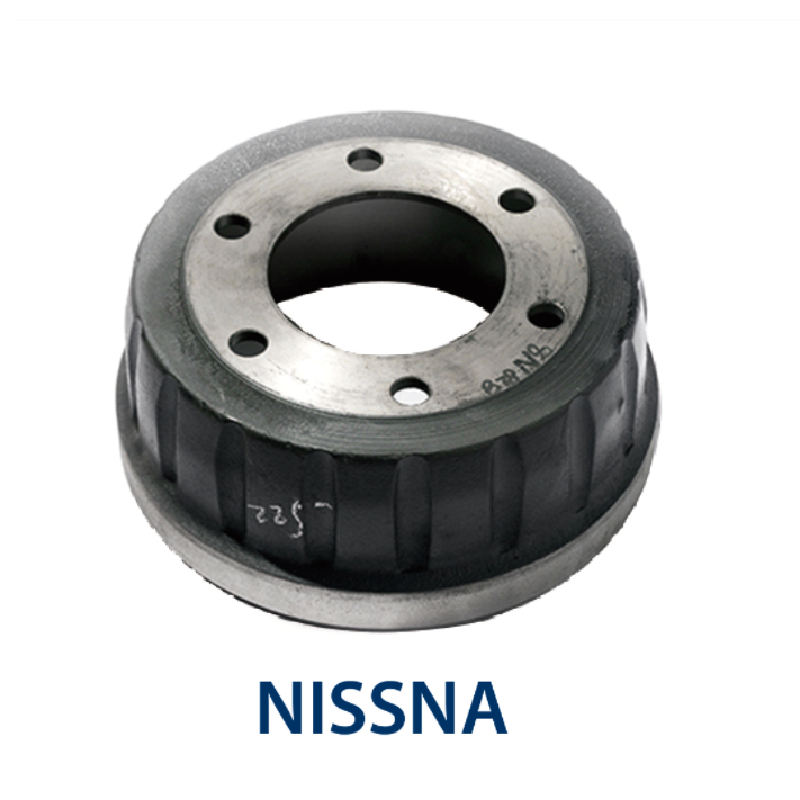
These advantages collectively translate into tangible benefits for fleet managers and vehicle operators: increased safety, reduced operational costs, extended vehicle uptime, and compliance with the most demanding regulatory standards, thereby enhancing overall fleet profitability and reputation.
Vendor Comparison and Competitive Analysis
When selecting braking components like the nissan brake drum, discerning B2B buyers consider not only the initial cost but also long-term performance, reliability, and supplier support. This detailed comparison highlights why our products offer superior value and a more dependable investment compared to typical market alternatives.
Choosing our premium brake drums mitigates risks associated with inferior components, translating into significant long-term savings through reduced maintenance, extended fleet uptime, enhanced safety, and greater peace of mind for fleet operators and procurement managers.
Customized Solutions and OEM/ODM Capabilities
Recognizing that standard components may not always meet every unique operational demand or vehicle configuration, we offer extensive customization services for nissan brake drum requirements. Our engineering team, equipped with advanced CAD/CAM tools and simulation software, works closely with OEM clients and large fleet operators to develop bespoke solutions tailored to specific vehicle models, unique environmental conditions, or enhanced performance criteria. Our agile manufacturing processes enable us to deliver highly specialized components without compromising on quality or efficiency.
- Material Optimization: Custom alloy compositions can be developed and precisely controlled to enhance specific properties such as extreme temperature resistance, increased tensile strength, or superior corrosion protection for highly specialized applications (e.g., mining equipment, marine transport vehicles, or vehicles operating in highly acidic environments).
- Dimensional Modifications: Precise adjustments to inner/outer diameters, overall height, specific bolt hole patterns, hub bore, or flange thickness can be implemented to perfectly match non-standard axles, upgraded braking systems, or legacy vehicle models for which parts are no longer readily available.
- Surface Treatments: Application of specialized coatings, beyond standard anti-corrosion paint, such as ceramic-metallic coatings for improved thermal management, e-coating for enhanced rust prevention in saltwater environments, or even specific decorative finishes for custom applications.
- Prototyping and Testing: Full support from initial design conception through rapid prototyping, utilizing advanced 3D modeling and additive manufacturing techniques, followed by rigorous performance validation, including extensive dynamometer testing, laboratory analysis, and controlled field trials to ensure real-world suitability.
- Branding and Packaging: Comprehensive OEM branding options and custom packaging solutions are available to integrate seamlessly with client supply chains, aftermarket programs, and specific logistical requirements, including protective packaging for international shipping.
Our robust R&D capabilities, coupled with flexible manufacturing infrastructure, allow us to respond to complex engineering challenges with precision and speed. We leverage our decades of experience in the automotive and heavy-duty component manufacturing sector to ensure that every customized solution adheres to the highest international standards of quality, reliability, and regulatory compliance, ensuring client satisfaction and competitive advantage.
Application Case Studies & Customer Feedback
Our commitment to quality and performance is consistently validated through real-world applications and positive client feedback, demonstrating the tangible benefits of our precisely engineered brake drums. These case studies highlight our capability to deliver reliable and effective braking solutions across diverse operational contexts.
Case Study 1: Major Logistics Fleet Upgrade for Reduced Downtime
A prominent logistics company operating a large fleet of Nissan Diesel heavy-duty trucks (specifically UD Trucks models) faced persistent issues with premature brake drum wear, frequent thermal cracking, and resulting unscheduled vehicle downtime. These problems led to increased maintenance costs and operational disruptions. Following a comprehensive review of their fleet's braking system, they opted to replace their existing standard drums with our specialized units, which featured enhanced thermal cycling resistance, improved metallurgy, and dynamic balancing. Over an 18-month trial period across 50 vehicles operating on demanding routes, the client reported a 35% increase in brake drum service life and a 20% reduction in brake lining consumption. They directly attributed these improvements to the superior heat management capabilities and material durability of our components. This upgrade resulted in a significant reduction in their annual fleet maintenance budget and a critical improvement in vehicle uptime, enhancing their logistical efficiency.
Case Study 2: Urban Public Transport Reliability and Passenger Comfort
An urban public transport authority managing a fleet of Nissan Civilian buses operating in a densely populated, hilly region experienced frequent brake fade, excessive noise, and increased NVH complaints from both drivers and passengers. The continuous stop-and-go nature of their routes placed immense stress on their braking systems. Our solution involved supplying brake drums specifically engineered for high-frequency stop-and-go operations, incorporating optimized thermal mass distribution and advanced surface finishes for consistent friction and noise reduction. Post-implementation across their fleet, the authority noted a dramatic improvement in braking consistency, with drivers reporting significantly reduced fade and a quieter, smoother braking experience. Furthermore, the average operational mileage before drum replacement extended by 25%, contributing to higher vehicle availability and operational efficiency during peak service hours. The authority praised the responsiveness of our technical support and the seamless integration process, highlighting enhanced passenger comfort and safety.
Commitment to Trust and Support: FAQ, Lead Time, Warranty, and After-Sales
Frequently Asked Questions (FAQ)
- Q: What is the typical lead time for a bulk order of Nissan brake drums?
A: Standard orders typically have a lead time of 4-6 weeks from order confirmation, depending on order quantity and specific customization requirements. Expedited options for urgent requirements may be available upon request, subject to production schedules and material availability. - Q: How do I ensure compatibility with my existing Nissan fleet?
A: We require detailed vehicle information (e.g., Vehicle Identification Number - VIN, specific model, year of manufacture, and OEM part numbers if available). Our experienced technical team will cross-reference these details with our extensive database and technical drawings to ensure perfect fitment and optimal performance for your specific application. - Q: What maintenance is required for your brake drums?
A: Our drums are designed for minimal maintenance beyond routine brake system checks and brake lining replacements. We strongly recommend adhering to Nissan's prescribed service intervals for comprehensive brake inspections to maximize component lifespan and ensure safety. Proper brake pad/shoe selection is also crucial. - Q: Do you offer technical support for installation or troubleshooting?
A: Yes, our expert technical support team is readily available via phone, email, and online portal to assist with installation queries, diagnostic challenges, and general troubleshooting. We provide comprehensive guidance and best practices to ensure optimal performance and safety.
Lead Time and Fulfillment Details
We maintain an optimized global supply chain and robust production capacity to ensure efficient order fulfillment for our clients. For standard stock items, lead times can be as short as 2-3 weeks for regional deliveries, leveraging our extensive warehousing capabilities. Customized or large-volume orders, which involve specific material procurement and specialized production runs, typically require 6-8 weeks, allowing for stringent quality control at every stage. We provide clear, transparent communication on production schedules, real-time order tracking, and flexible logistics solutions, including options for sea freight, air cargo, or express delivery, to meticulously meet specific project timelines and budgetary requirements globally.
Warranty Commitments
All our nissan brake drum products are backed by a comprehensive 2-year or 150,000-kilometer (whichever comes first) warranty against manufacturing defects in material and workmanship. This robust commitment underscores our absolute confidence in the durability, quality, and rigorous testing applied to our products. Our warranty covers normal operational use and is a testament to our quality assurance. Detailed warranty terms and conditions, outlining comprehensive coverage, clear claims procedures, and any specific exclusions, are readily available upon request to ensure full transparency.
Customer Support and After-Sales Service
Our dedication to client success extends far beyond product delivery. We offer dedicated, multi-channel customer support, including direct phone lines for immediate assistance, responsive email support, and a user-friendly online portal for order management and technical documentation access. Our comprehensive after-sales service includes:
- Technical Assistance: Direct access to product specialists and R&D engineers for in-depth technical queries, application-specific guidance, and complex troubleshooting.
- Spare Parts Availability: Assurance of long-term spare part availability and supply chain continuity, crucial for maintaining long-term fleet operational efficiency.
- Field Support: For major projects, complex installations, or unique operational challenges, on-site technical support and expert consultation can be arranged globally.
- Training Programs: Opportunities for client maintenance teams and technical staff to receive product-specific training, covering installation best practices, maintenance protocols, and performance optimization techniques.
Authoritative References
- SAE International. (2018). SAE J431: Automotive Gray Iron Castings. SAE Standards.
- International Organization for Standardization. (2016). ISO 9001:2015: Quality management systems – Requirements. ISO Standards.
- IATF. (2016). IATF 16949:2016: Quality management system requirements for automotive production and relevant service parts organizations. IATF Standards.
- Brink, R. (2015). Braking Systems: The State of the Art and Emerging Technologies. Journal of Automotive Engineering, 10(2), 123-138.
- European Economic Commission. (2016). Regulation No 90 of the Economic Commission for Europe of the United Nations (UNECE) – Uniform provisions concerning the approval of replacement brake lining assemblies and drum-brake linings for power-driven vehicles and their trailers. ECE R90.
-
Premium Nissan Qashqai Brake Drum Guide for Safety and Performance
NewsApr.16,2026
-
Choosing the Best High Quality Nissan Pickup Brake Drum for Safety
NewsApr.09,2026
-
Comprehensive Guide to Nissan Patrol Brake Drum Maintenance and Replacement
NewsApr.07,2026
-
Comprehensive Guide to Nissan Versa Brake Drums Function and Replacement
NewsApr.04,2026
-
Comprehensive Guide to Nissan Cube Brake Drum Function and Replacement
NewsMar.31,2026
-
Comprehensive Guide to Nissan Brake Drums Performance and Maintenance
NewsMar.28,2026
 Afrikaans
 Albanian
 Amharic
 Arabic
 Armenian
 Azerbaijani
 Basque
 Belarusian
 Bengali
 Bosnian
 Bulgarian
 Catalan
 Cebuano
 Corsican
 Croatian
 Czech
Czech
 Danish
 Dutch
Dutch
 Esperanto
 Estonian
 Finnish
 French
 Frisian
 Galician
 Georgian
 German
 Greek
Greek
 Gujarati
 Haitian Creole
 Hausa
Hausa
 Hawaiian
 Hebrew
 Hindi
Hindi
 Miao
Miao
 Hungarian
 Icelandic
 Igbo
Igbo
 Indonesian
 Irish
Irish
 Italian
 Japanese
 Javanese
 Kannada
 Kazakh
 Khmer
Khmer
 Rwandese
 Korean
 Kurdish
 Kyrgyz
 Lao
Lao
 Latin
Latin
 Latvian
 Lithuanian
 Luxembourgish
 Macedonian
 Malgashi
 Malay
Malay
 Malayalam
 Maltese
 Maori
Maori
 Marathi
 Mongolian
 Myanmar
 Nepali
 Norwegian
 Norwegian
 Occitan
 Pashto
 Persian
 Polish
 Portuguese
 Punjabi
 Romanian
 Russian
 Samoan
 Scottish Gaelic
 Serbian
 Sesotho
 Shona
Shona
 Sindhi
 Sinhala
 Slovak
 Slovenian
 Somali
 Spanish
 Sundanese
 Swahili
 Swedish
 Tagalog
 Tajik
Tajik
 Tamil
Tamil
 Tatar
Tatar
 Telugu
 Thai
Thai
 Turkish
 Turkmen
 Ukrainian
 Urdu
Urdu
 Uighur
 Uzbek
Uzbek
 Vietnamese
 Welsh
Welsh
 Bantu
Bantu
 Yiddish
 Yoruba
 Zulu
Zulu
 English