
Oct . 16, 2025 14:45 Back to list
SAF axle hub nut torque drum brakes | OEM Specs & Chart
Field Notes on SAF Hub Hardware: Getting Torque Right on Drum Brakes
If you’ve ever chased a mystery vibration after a long haul, you know how touchy hub joints can be. Today I’m looking at saf axle hub nut torque drum brakes from an insider’s angle—what specs matter, how shops are setting torque, and why a couple of small choices (coating, thread pitch) make a big difference over 300,000 km.
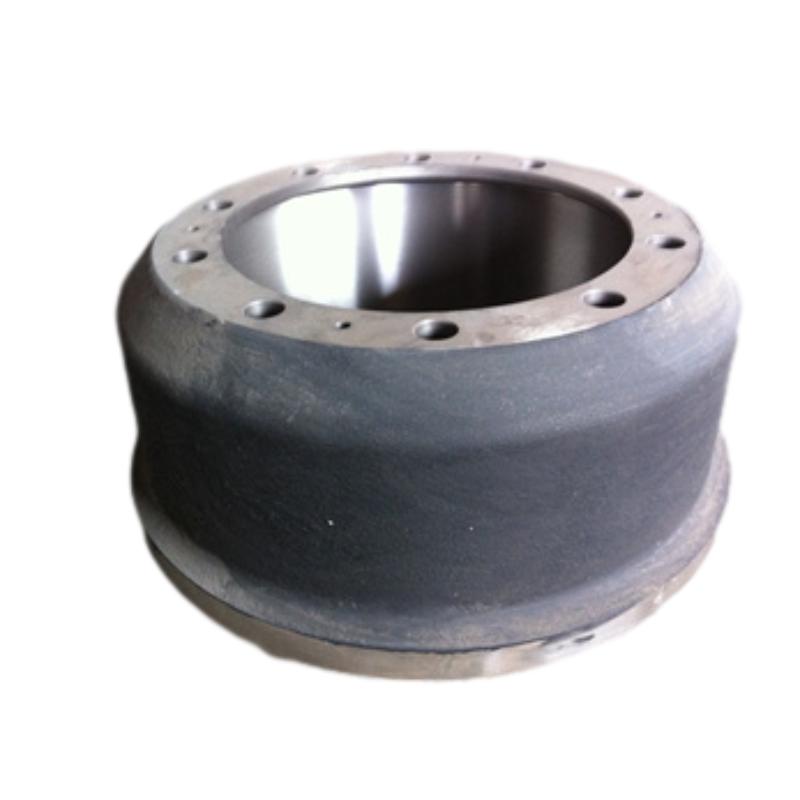
What’s trending in the yard (and the lab)
Industry chatter right now is about torque retention under heat cycles. Drum brakes aren’t going away—fleet managers like their durability—so the focus is on better coatings and more consistent clamping force. In fact, many customers say they’ve moved to calibrated digital wrenches and angle-torque methods. I guess that’s overdue. Also, corrosion testing is getting tougher: 240–480 h salt spray is becoming the baseline.
Product snapshot and specs
Origin: China. Brand line: SAF. Description is simple—hub hardware for commercial axles used with drum brake assemblies. Below are typical specs I see on current lots (real-world use may vary).
| Parameter | Spec (≈) |
|---|---|
| Product Name | SAF Hub Nut for drum-brake axles |
| Thread / Pitch | M42×1.5 (common on Euro-style axles); others customizable |
| Material / Class | Alloy steel, ISO 898-1 10.9 equiv.; case-hardened washer |
| Coating | Zinc-flake or Zn-Ni, 240–720 h ISO 9227 NSS |
| Recommended Torque | 600–700 N·m initial, then 60–90° angle (shop practice); verify per axle maker |
| Runout / Face Flatness | ≤0.05 mm typical on mating faces |
| Service Life | Up to 500k km with routine inspections (duty dependent) |
| Certifications | ISO 9001 plant; brake system compliance per ECE R13 / FMVSS 121 integration |
Process flow, testing, and what I watch for
Materials: alloy steel bar, controlled sulfur for machinability. Methods: CNC turning, rolled threads for grain flow, induction hardening on bearing face. Testing: hardness (ISO 6508), proof load (ISO 898-1), salt spray (ISO 9227), torque-tension correlation on sample lots. Typical test data I’ve seen: 10-cycle torque retention loss ≤8% after 200 °C heat soak; no red rust at 480 h on Zn-flake.
Where it’s used
- Long-haul trailers and semi-trailers with drum brakes.
- Municipal fleets—refuse, street sweepers (stop–go heat cycles).
- Construction low-beds, where contamination and shock loads are routine.
Vendor snapshot (real-world buying notes)
| Vendor | Torque Guidance | Coating | Certs | Lead Time |
|---|---|---|---|---|
| SAF (China) | 600–700 N·m + angle | Zn-flake / Zn-Ni | ISO 9001 | 2–5 weeks typical |
| OEM B (EU) | Per axle PN sheet | Zn-Ni | IATF 16949 | Stock on common PNs |
| Aftermarket C (US) | Fixed torque charts | Zinc-plated | ISO 9001 | 1–2 weeks |
Note: always confirm torque with the axle/brake OEM. Charts vary, and yes, sometimes by more than you’d expect.
Advantages and customization
- Consistent clamp from rolled-thread geometry and hardened seating face.
- Coatings tuned to climate: high-salt regions benefit from Zn-flake.
- Customization: thread form, flange OD, captive washer, laser ID, torque stripe paint.
Quick case note
A regional tanker fleet reported drum pulsation after 60k km. Switching to angle-torque and Zn-flake coated nuts cut re-torque events by ~30% over two quarters. Not a lab study, but the maintenance logs were convincing. As they put it: “Less creep, fewer pit stops.”
Bottom line: with saf axle hub nut torque drum brakes, get the installation process right—clean threads, light oil where specified, calibrated wrench, and a short recheck after the first heat cycle. Do that, and the hardware quietly disappears into the background, which is exactly what you want.
Authoritative references
- ISO 898-1: Mechanical properties of fasteners—Bolts, screws and studs.
- ISO 9227: Corrosion tests in artificial atmospheres—Salt spray tests.
- ISO 6508: Metallic materials—Rockwell hardness test.
- ECE R13: Uniform provisions concerning the approval of vehicles of categories M, N and O with regard to braking.
- FMVSS 121: Air Brake Systems—U.S. DOT standard.
-
Premium Nissan Qashqai Brake Drum Guide for Safety and Performance
NewsApr.16,2026
-
Choosing the Best High Quality Nissan Pickup Brake Drum for Safety
NewsApr.09,2026
-
Comprehensive Guide to Nissan Patrol Brake Drum Maintenance and Replacement
NewsApr.07,2026
-
Comprehensive Guide to Nissan Versa Brake Drums Function and Replacement
NewsApr.04,2026
-
Comprehensive Guide to Nissan Cube Brake Drum Function and Replacement
NewsMar.31,2026
-
Comprehensive Guide to Nissan Brake Drums Performance and Maintenance
NewsMar.28,2026
 Afrikaans
 Albanian
 Amharic
 Arabic
 Armenian
 Azerbaijani
 Basque
 Belarusian
 Bengali
 Bosnian
 Bulgarian
 Catalan
 Cebuano
 Corsican
 Croatian
 Czech
Czech
 Danish
 Dutch
Dutch
 Esperanto
 Estonian
 Finnish
 French
 Frisian
 Galician
 Georgian
 German
 Greek
Greek
 Gujarati
 Haitian Creole
 Hausa
Hausa
 Hawaiian
 Hebrew
 Hindi
Hindi
 Miao
Miao
 Hungarian
 Icelandic
 Igbo
Igbo
 Indonesian
 Irish
Irish
 Italian
 Japanese
 Javanese
 Kannada
 Kazakh
 Khmer
Khmer
 Rwandese
 Korean
 Kurdish
 Kyrgyz
 Lao
Lao
 Latin
Latin
 Latvian
 Lithuanian
 Luxembourgish
 Macedonian
 Malgashi
 Malay
Malay
 Malayalam
 Maltese
 Maori
Maori
 Marathi
 Mongolian
 Myanmar
 Nepali
 Norwegian
 Norwegian
 Occitan
 Pashto
 Persian
 Polish
 Portuguese
 Punjabi
 Romanian
 Russian
 Samoan
 Scottish Gaelic
 Serbian
 Sesotho
 Shona
Shona
 Sindhi
 Sinhala
 Slovak
 Slovenian
 Somali
 Spanish
 Sundanese
 Swahili
 Swedish
 Tagalog
 Tajik
Tajik
 Tamil
Tamil
 Tatar
Tatar
 Telugu
 Thai
Thai
 Turkish
 Turkmen
 Ukrainian
 Urdu
Urdu
 Uighur
 Uzbek
Uzbek
 Vietnamese
 Welsh
Welsh
 Bantu
Bantu
 Yiddish
 Yoruba
 Zulu
Zulu
 English