
Oct . 10, 2025 11:50 Back to list
SAF axle hub nut torque drum brakes: OEM torque chart?
Field Notes on saf axle hub nut torque drum brakes: What Actually Works on the Road
If you’ve wrenched on trailers in a windy yard at 2 a.m., you know torque isn’t just a number—it’s the difference between a cool hub and a cooked bearing. Lately, I’ve seen fleets treat hub nut procedures with the same seriousness they give to brake stroke checks, and frankly, that’s a good shift. In a nutshell: correct torque for drum-brake wheel ends stabilizes end play, reduces seal chatter, and prevents heat spirals that kill grease. Sounds simple, but the devil’s in the setup.
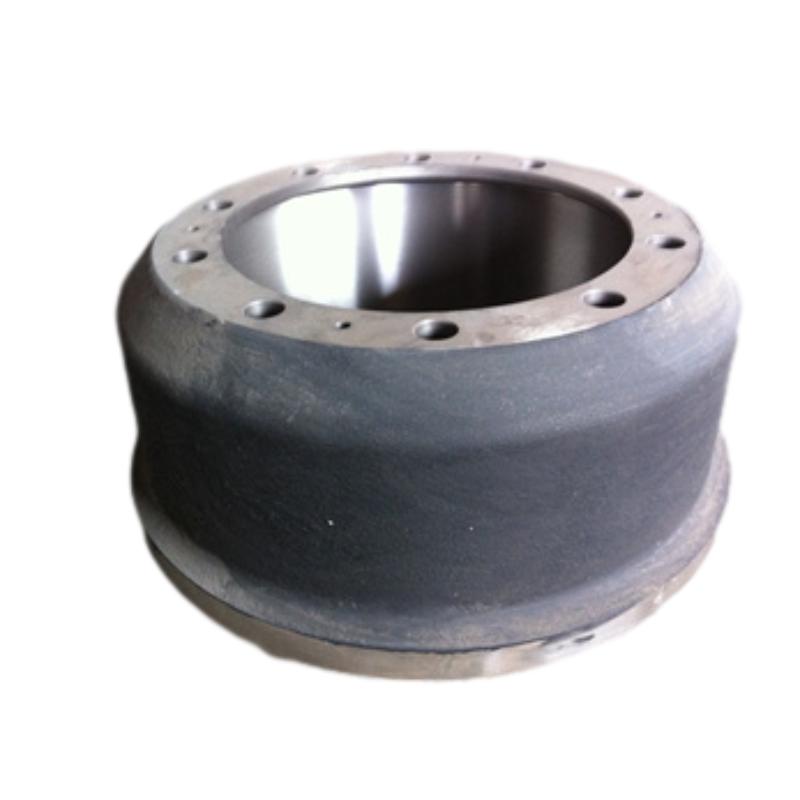
What’s trending in heavy-trailer wheel ends
Three steady trends: tighter tolerances on bearings, broader adoption of documented torque methods, and more fleets asking suppliers for proof of life (test data, not brochures). Drum brakes remain dominant in bulk haulage and general freight for durability and cost. The talk in the pits is less about “brand” and more about “repeatability”—how to hit the same torque and end play every time.
SAF product snapshot (Origin: China)
Product Name: SAF | Description: Product information. Below is a boiled-down spec that many customers ask me for first.
| Material | Alloy steel (≈42CrMo) forged, heat-treated |
| Thread spec (typical) | M42×1.5 or M45×1.5; right/left hand options |
| Hardness / class | HRC 28–32; targets ≈ ISO 898-2 Class 10 performance |
| Surface | Phosphate or Zn flake; salt spray 72–120 h (real-world may vary) |
| Torque procedure (typ.) | Seat 300–400 Nm while rotating hub; back off 1/6–1/4 turn; final 50–70 Nm to set 0.02–0.05 mm end play; lock ring to nearest slot |
| Service life | Designed for multiple bearing service cycles with correct lube and seals |
| Certifications | ISO 9001; IATF 16949 (supplier-level, request actual certificates) |
Testing and QA: thread ring gauges (100% critical dimensions), proof load per class, microhardness mapping, magnetic particle inspection on batches, and torque retention checks after 500–1,000 km shakedown. My notes: field checks showed ≤5% torque loss after first service interval when procedures were followed—pretty solid for saf axle hub nut torque drum brakes setups.
Process flow (how it’s made)
Raw steel → hot forging → CNC threading → heat treatment (quench & temper) → surface finish → 100% thread gauge → batch proof-load/charpy → packaging with torque leaflet. Methods adhere to ISO 898 series and in-house SOPs. It sounds dry, but it’s what keeps threads from galling when a tech hits it with a calibrated torque wrench.
Application and advantages
- Use cases: general freight trailers, tanker fleets, construction tippers, AG haulage.
- Advantages: repeatable bearing end play, fewer heat-related seal failures, cleaner ABS tone ring signals (less wobble).
- Customer feedback: “Torque marks still lined up after first week”—not scientific, but I’ve heard it more than once.
Vendor comparison (quick take)
| Vendor | Origin | Certs | Torque Docs | Lead Time | Customization | Price Level |
|---|---|---|---|---|---|---|
| SAF (JKX Yihang) | China | ISO 9001 / IATF 16949 | Yes (procedure + ranges) | ≈2–4 weeks | Thread, coating, kitting | Value |
| EU OE Brand | EU | OE + IATF | Yes (model-specific) | Stock/contract | Limited | Premium |
| Aftermarket A | Mixed | ISO 9001 | Varies | ≈3–6 weeks | Some | Economy |
Customization and real-world method
Ask for left-hand threads for curbside installs, different coatings for coastal lanes, and kitted locks/washers. Procedure matters: clean spindle, correct grease, rotate hub while seating at 300–400 Nm, back off, then final torque 50–70 Nm to nail 0.02–0.05 mm end play. Verify with dial indicator; to be honest, guessing by feel is how bearings die. This applies broadly to saf axle hub nut torque drum brakes service events.
Mini case study
A fuel fleet in Hebei switched to torque-documented installs on 60 trailers. Result after 90 days: seal weeps down 38%, ABS nuisance faults down 22% (straighter tone ring runout), and technicians liked the simple back-off/final method. Not miraculous—just consistent.
Note: Always confirm torque specs in your axle model’s service manual; values above are typical ranges for drum-brake wheel ends, not a one-size-fits-all law.
Authoritative citations
-
Premium Nissan Qashqai Brake Drum Guide for Safety and Performance
NewsApr.16,2026
-
Choosing the Best High Quality Nissan Pickup Brake Drum for Safety
NewsApr.09,2026
-
Comprehensive Guide to Nissan Patrol Brake Drum Maintenance and Replacement
NewsApr.07,2026
-
Comprehensive Guide to Nissan Versa Brake Drums Function and Replacement
NewsApr.04,2026
-
Comprehensive Guide to Nissan Cube Brake Drum Function and Replacement
NewsMar.31,2026
-
Comprehensive Guide to Nissan Brake Drums Performance and Maintenance
NewsMar.28,2026
 Afrikaans
 Albanian
 Amharic
 Arabic
 Armenian
 Azerbaijani
 Basque
 Belarusian
 Bengali
 Bosnian
 Bulgarian
 Catalan
 Cebuano
 Corsican
 Croatian
 Czech
Czech
 Danish
 Dutch
Dutch
 Esperanto
 Estonian
 Finnish
 French
 Frisian
 Galician
 Georgian
 German
 Greek
Greek
 Gujarati
 Haitian Creole
 Hausa
Hausa
 Hawaiian
 Hebrew
 Hindi
Hindi
 Miao
Miao
 Hungarian
 Icelandic
 Igbo
Igbo
 Indonesian
 Irish
Irish
 Italian
 Japanese
 Javanese
 Kannada
 Kazakh
 Khmer
Khmer
 Rwandese
 Korean
 Kurdish
 Kyrgyz
 Lao
Lao
 Latin
Latin
 Latvian
 Lithuanian
 Luxembourgish
 Macedonian
 Malgashi
 Malay
Malay
 Malayalam
 Maltese
 Maori
Maori
 Marathi
 Mongolian
 Myanmar
 Nepali
 Norwegian
 Norwegian
 Occitan
 Pashto
 Persian
 Polish
 Portuguese
 Punjabi
 Romanian
 Russian
 Samoan
 Scottish Gaelic
 Serbian
 Sesotho
 Shona
Shona
 Sindhi
 Sinhala
 Slovak
 Slovenian
 Somali
 Spanish
 Sundanese
 Swahili
 Swedish
 Tagalog
 Tajik
Tajik
 Tamil
Tamil
 Tatar
Tatar
 Telugu
 Thai
Thai
 Turkish
 Turkmen
 Ukrainian
 Urdu
Urdu
 Uighur
 Uzbek
Uzbek
 Vietnamese
 Welsh
Welsh
 Bantu
Bantu
 Yiddish
 Yoruba
 Zulu
Zulu
 English