
Oct . 06, 2025 00:30 Back to list
SAF Axle Hub Nut Torque for Drum Brakes: OEM Specs + Steps?
If you’re trying to pin down saf axle hub nut torque drum brakes without getting lost in guesswork, you’re not alone. Fleet managers tell me torque is where uptime lives or dies, especially on long-haul trailers and municipal rigs that see stop-start abuse. And yes, torque isn’t just a number—it’s a process.
The SAF-branded assemblies coming out of China have been getting traction, partly because they mix straightforward drum-brake durability with sensible pricing. To be honest, the market trend is clear: fleets want consistent torque control, pre-adjusted bearing systems, and parts that arrive with documentation you can actually use.
What torque are we really talking about?
Two torques matter in a drum-brake wheel end: the spindle (hub) nut procedure and the wheel nut torque. In field practice for heavy trailers, initial hub nut “seating” is often ≈ 500–600 Nm, followed by a controlled back-off and a lower final set per the bearing design. Wheel nuts typically land around 600–700 Nm. I’ll stress this: always follow the axle’s service manual and the bearing maker’s instructions; numbers vary by hub type, lock mechanism, and lubricant.
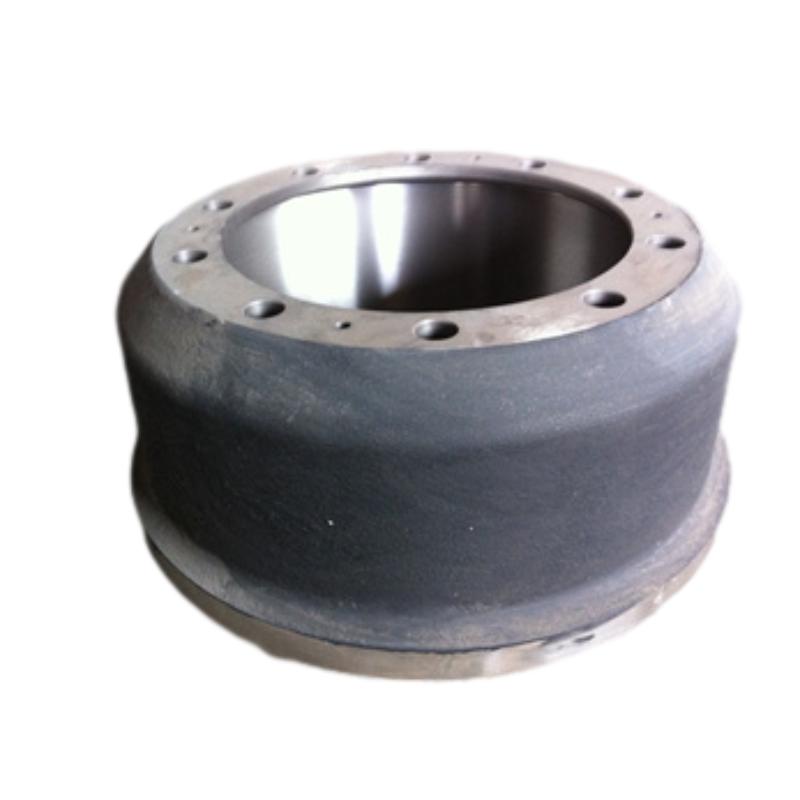
SAF Product Snapshot (Drum Brake Axle Hub Assembly)
| Product Name | SAF (Product information) |
| Origin | China |
| Brake type | Drum, S-cam |
| Hub nut (seating) torque | ≈ 500–600 Nm, then back-off per manual |
| Wheel nut torque | ≈ 600–700 Nm (check wheel, stud, lube conditions) |
| Materials | Hub: 42CrMo-class alloy; Spindle: 20MnV/42CrMo; Drums: high-strength cast |
| Surface & protection | Phosphate/paint; anti-corrosion to ISO 9227 (≈ 240–480 h) |
| Service life | ≈ 600,000–1,000,000 km (duty & maintenance dependent) |
| Certs | IATF 16949/ISO 9001 (vendor dependent); ECE R13 compliance for braking systems |
Process & Testing Flow (how it’s built to hold torque)
- Forged hub/spindle blanks → precision CNC machining (ISO 286 tolerances)
- Heat treatment to spec hardness (e.g., HRC 28–36 where applicable), shot peening on stress zones
- Surface prep and coating; bearing seat finish Ra ≈ 0.8–1.6 μm
- Torque-procedure validation: initial torque, back-off, endplay check (TMC RP 618A)
- Runout ≤ 0.08–0.12 mm (typical), endplay 0.025–0.127 mm (target window)
- Salt spray (ISO 9227), brake performance vs. ECE R13, road-sim dyno cycling
Where it’s used and why fleets care
Long-haul trailers, tankers, ag haulers, and city delivery. Advantages people report: steady torque retention after heat cycles, predictable endplay, and parts that don’t fight you during service. With saf axle hub nut torque drum brakes, the big win is fewer re-torque events after initial bedding.
Vendor comparison (indicative)
| Vendor | Lead time | Customization | Certs | Typical price |
|---|---|---|---|---|
| SAF (China, JKX Yihang) | 2–5 weeks | High (stud length, coatings, drum spec) | ISO 9001/IATF 16949 (vendor supplied) | $ |
| SAF‑HOLLAND (OEM) | Stock–3 weeks | Medium | IATF 16949 | $$$ |
| BPW | Stock–4 weeks | Medium | IATF 16949 | $$$ |
| Meritor | 2–4 weeks | Medium | IATF 16949 | $$ |
Field data, feedback, and a quick case
- Torque retention: ±8–12% scatter after 1,000 thermal cycles (lab dyno, grease per spec)
- Endplay stability: remained within 0.05–0.10 mm during first 20k km, per fleet checks
- Customer note: “Surprisingly low re-torque frequency,” says a regional tanker operator
Mini-case: A 80-trailer fleet switched to saf axle hub nut torque drum brakes spec and reported a 14% drop in wheel-end service calls over six months—mostly because techs followed the documented torque/back-off/endplay sequence. Simple, but it sticks.
Final word: torque is a system. Use calibrated tools, follow the exact procedure, and log the values. Your bearings, drums, and wallets will thank you.
Authoritative citations
- SAF‑HOLLAND Technical Literature and Service Manuals (Axles & Drum Brakes): https://safholland.com/na/en/technical-literature
- TMC RP 618A, Wheel Bearing Adjustment Procedure, American Trucking Associations: https://tmc.trucking.org
- UNECE Regulation No. 13 – Uniform provisions concerning the approval of vehicles of categories M, N and O with regard to braking: https://unece.org/
- IATF 16949 Automotive Quality Management System: https://www.iatfglobaloversight.org/
- ISO 9227: Corrosion tests in artificial atmospheres — Salt spray tests: https://www.iso.org/standard/63543.html
-
Premium Nissan Qashqai Brake Drum Guide for Safety and Performance
NewsApr.16,2026
-
Choosing the Best High Quality Nissan Pickup Brake Drum for Safety
NewsApr.09,2026
-
Comprehensive Guide to Nissan Patrol Brake Drum Maintenance and Replacement
NewsApr.07,2026
-
Comprehensive Guide to Nissan Versa Brake Drums Function and Replacement
NewsApr.04,2026
-
Comprehensive Guide to Nissan Cube Brake Drum Function and Replacement
NewsMar.31,2026
-
Comprehensive Guide to Nissan Brake Drums Performance and Maintenance
NewsMar.28,2026
 Afrikaans
 Albanian
 Amharic
 Arabic
 Armenian
 Azerbaijani
 Basque
 Belarusian
 Bengali
 Bosnian
 Bulgarian
 Catalan
 Cebuano
 Corsican
 Croatian
 Czech
Czech
 Danish
 Dutch
Dutch
 Esperanto
 Estonian
 Finnish
 French
 Frisian
 Galician
 Georgian
 German
 Greek
Greek
 Gujarati
 Haitian Creole
 Hausa
Hausa
 Hawaiian
 Hebrew
 Hindi
Hindi
 Miao
Miao
 Hungarian
 Icelandic
 Igbo
Igbo
 Indonesian
 Irish
Irish
 Italian
 Japanese
 Javanese
 Kannada
 Kazakh
 Khmer
Khmer
 Rwandese
 Korean
 Kurdish
 Kyrgyz
 Lao
Lao
 Latin
Latin
 Latvian
 Lithuanian
 Luxembourgish
 Macedonian
 Malgashi
 Malay
Malay
 Malayalam
 Maltese
 Maori
Maori
 Marathi
 Mongolian
 Myanmar
 Nepali
 Norwegian
 Norwegian
 Occitan
 Pashto
 Persian
 Polish
 Portuguese
 Punjabi
 Romanian
 Russian
 Samoan
 Scottish Gaelic
 Serbian
 Sesotho
 Shona
Shona
 Sindhi
 Sinhala
 Slovak
 Slovenian
 Somali
 Spanish
 Sundanese
 Swahili
 Swedish
 Tagalog
 Tajik
Tajik
 Tamil
Tamil
 Tatar
Tatar
 Telugu
 Thai
Thai
 Turkish
 Turkmen
 Ukrainian
 Urdu
Urdu
 Uighur
 Uzbek
Uzbek
 Vietnamese
 Welsh
Welsh
 Bantu
Bantu
 Yiddish
 Yoruba
 Zulu
Zulu
 English