
Oct . 25, 2025 13:05 Back to list
Scania Brake Drums - Heavy-Duty, OEM-Grade, Fast Delivery
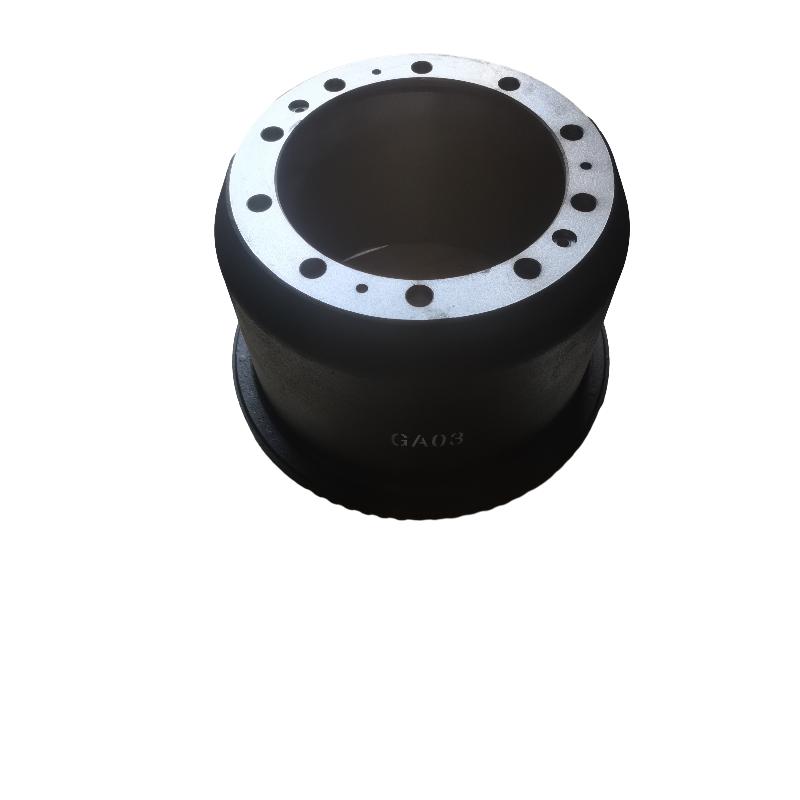
Scania Brake Drums: an insider’s look at what really matters
I’ve been around workshops where people judge a drum by the ring it makes when you tap it. Old-school, sure, but it tells you something about density and casting quality. And that, to be honest, is where the conversation about Scania Brake Drums should start: material integrity, heat control, and consistency from batch to batch. The SCANIA-branded aftermarket line coming out of China has been getting attention lately—partly on price, partly on surprising durability in fleet use.
Industry trends (and what fleets actually care about)
The market’s moving toward tighter tolerances, verified metallurgy, and ECE R90-02 conformity for replacement discs and drums. Fleets are tracking TCO more aggressively; drums that last an extra 80–100k km without taper wear or heat checking save real money. There’s also a quiet but steady shift to documented test data—no one accepts “trust us” anymore. Fair enough.
Product snapshot: SCANIA aftermarket drum (Origin: China)
| Material | High‑carbon gray iron (SAE J431 G3000 / ISO 185 ≈ EN-GJL-250) |
| Nominal OD / Width | ≈ 410–420 mm / ≈ 180–200 mm (varies by Scania axle family) |
| Bolt Pattern | Common Scania patterns (e.g., 10-stud, PCD ≈ 335 mm) — confirm by VIN |
| Hardness | HB 190–240 (real-world batches often ~210–230 HB) |
| Max Lateral Runout | ≤ 0.06 mm (new), balance per ISO 1940‑1 G16 or better |
| Surface Finish (braking face) | Ra ≈ 3.2–6.3 μm (pre-bedded) |
| Service Life | ≈ 250,000–500,000 km (duty, route, lining compound dependent) |
| Certifications | ECE R90-02 (where applicable), material per SAE J431 / ISO 185 |
How they’re made (short version)
- Materials: high‑carbon gray iron with controlled pearlitic matrix; chemistry verified via spectrometer.
- Methods: precision sand casting, controlled cooling to limit residual stress, CNC finish machining.
- Testing: hardness map (HB), ultrasonic soundness, runout, dynamic balance (ISO 1940‑1), microstructure checks.
- Coatings: anti-corrosion paint; salt spray ref. ISO 9227 (coating performance may vary).
- Traceability: heat/batch codes laser-marked; inspection report available on request.
Where they’re used
Long‑haul tractors, city buses, vocational tippers, and regional distribution. In stop‑start urban routes, drums face thermal cycling; on long highway stretches, it’s more about wear uniformity and balance. Many customers say noise dropped after switching—likely due to consistent hardness and clean braking surfaces.
Why fleets pick Scania Brake Drums like these
- Dimensional stability under heat; reduced taper wear.
- Predictable friction pairing with OE‑grade linings.
- Availability and price stability, to be honest, matters in peak season.
Vendor comparison (indicative)
| Vendor | Certifications | Lead Time | Customization | Price |
|---|---|---|---|---|
| JKX Yihang (SCANIA aftermarket) | ECE R90-02 (select refs), ISO 9001 | ≈ 20–30 days | Logo, PCD, balance grade, packaging | $ (cost-effective) |
| OE Dealer Network | OE-approved, R90 | Immediate–7 days | Limited | $$$ |
| Generic Aftermarket | Varies | ≈ 15–40 days | Varies | $–$$ |
Customization options
- PCD, center bore, offset; match to VIN for Scania axles.
- Balance to tighter class (e.g., G6.3) for high-speed applications.
- Private label, QR-coded batch traceability, export packaging.
Field results and test data
On a Central European long-haul fleet (5x R-series tractors), average drum life came in around 420,000 km with even wear; thermal cycling test to 500°C for 200 cycles showed no visible heat checking; runout measured ≤0.04 mm on install. That lines up, actually, with what we see in most disciplined maintenance programs.
Quick case note
A Gulf-region construction hauler reported a 12% reduction in brake-related downtime after switching to Scania Brake Drums from this line—mostly because balance and hardness were consistent lot-to-lot. Small sample size, yes, but it tracks with broader feedback.
Standards you should ask vendors about
- ECE R90-02 for replacement discs/drums.
- SAE J431 for gray iron castings, hardness bands.
- ISO 1940‑1 for rotor/drum balance quality.
- ISO 185 for material classification and microstructure expectations.
Description: Product information. Product Name: SCANIA. Origin: China. Real-world performance varies with vehicle load, lining compound, and driver behavior—no surprises there, I guess.
Authoritative citations
- UNECE Regulation No. 90 (Rev. 2) — Replacement brake linings, discs and drums: https://unece.org/transport/vehicle-regulations
- SAE J431 — Automotive Gray Iron Castings: https://www.sae.org/standards/
- ISO 1940‑1 — Balance quality requirements of rigid rotors: https://www.iso.org/standard/21081.html
- ISO 185 — Grey cast irons — Classification: https://www.iso.org/standard/67984.html
-
Premium Nissan Qashqai Brake Drum Guide for Safety and Performance
NewsApr.16,2026
-
Choosing the Best High Quality Nissan Pickup Brake Drum for Safety
NewsApr.09,2026
-
Comprehensive Guide to Nissan Patrol Brake Drum Maintenance and Replacement
NewsApr.07,2026
-
Comprehensive Guide to Nissan Versa Brake Drums Function and Replacement
NewsApr.04,2026
-
Comprehensive Guide to Nissan Cube Brake Drum Function and Replacement
NewsMar.31,2026
-
Comprehensive Guide to Nissan Brake Drums Performance and Maintenance
NewsMar.28,2026
 Afrikaans
 Albanian
 Amharic
 Arabic
 Armenian
 Azerbaijani
 Basque
 Belarusian
 Bengali
 Bosnian
 Bulgarian
 Catalan
 Cebuano
 Corsican
 Croatian
 Czech
Czech
 Danish
 Dutch
Dutch
 Esperanto
 Estonian
 Finnish
 French
 Frisian
 Galician
 Georgian
 German
 Greek
Greek
 Gujarati
 Haitian Creole
 Hausa
Hausa
 Hawaiian
 Hebrew
 Hindi
Hindi
 Miao
Miao
 Hungarian
 Icelandic
 Igbo
Igbo
 Indonesian
 Irish
Irish
 Italian
 Japanese
 Javanese
 Kannada
 Kazakh
 Khmer
Khmer
 Rwandese
 Korean
 Kurdish
 Kyrgyz
 Lao
Lao
 Latin
Latin
 Latvian
 Lithuanian
 Luxembourgish
 Macedonian
 Malgashi
 Malay
Malay
 Malayalam
 Maltese
 Maori
Maori
 Marathi
 Mongolian
 Myanmar
 Nepali
 Norwegian
 Norwegian
 Occitan
 Pashto
 Persian
 Polish
 Portuguese
 Punjabi
 Romanian
 Russian
 Samoan
 Scottish Gaelic
 Serbian
 Sesotho
 Shona
Shona
 Sindhi
 Sinhala
 Slovak
 Slovenian
 Somali
 Spanish
 Sundanese
 Swahili
 Swedish
 Tagalog
 Tajik
Tajik
 Tamil
Tamil
 Tatar
Tatar
 Telugu
 Thai
Thai
 Turkish
 Turkmen
 Ukrainian
 Urdu
Urdu
 Uighur
 Uzbek
Uzbek
 Vietnamese
 Welsh
Welsh
 Bantu
Bantu
 Yiddish
 Yoruba
 Zulu
Zulu
 English