
Oct . 20, 2025 12:50 Back to list
Scania Brake Drums | OEM-Grade, Long-Life, Fast Shipping
scania brake drums: field notes from the road and the shop floor
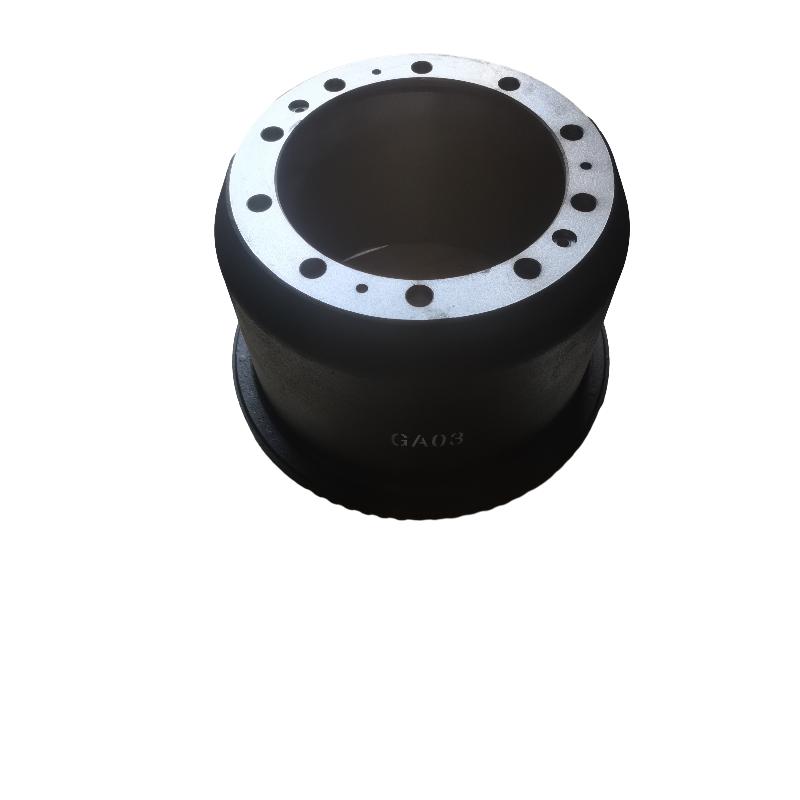
If you run European heavy-duty fleets, you already know the quiet hero in your braking system is the drum. And with Scania’s axle families, the geometry and metallurgy truly matter. Lately, I’ve been tracking a wave of well-engineered, ECE R90-compliant aftermarket scania brake drums coming out of China—surprisingly consistent, cost-effective, and, in real-world fleets, holding up better than some expected.
What’s trending
Two things: stricter conformity (ECE R90-02 now widely enforced for replacement drums) and data-driven balancing. Vendors offering ISO 1940-1 G16 balancing and SAE J431 G3000-class iron are earning repeat orders. Also, fleets are asking for traceability—heat codes, batch QR, even microhardness maps. It seems nerdy, but downtime costs more than metal these days.
Typical specifications (representative)
| Material | High-strength grey iron, SAE J431 G3000 (ASTM A48 Class 35 ≈) |
| Nominal drum dia. | ≈ 420 mm (common Scania applications; real-world use may vary) |
| Braking surface width | ≈ 180 mm |
| Hardness | HB 190–240 (Brinell), batch-verified |
| Runout / roundness | ≤ 0.10 mm runout; ≤ 0.15 mm out-of-round (as machined) |
| Dynamic balance | ISO 1940-1 G16 (typical for heavy-duty drums) |
| Coating | Anti-corrosion oil or electrophoretic primer |
| Service life | ≈ 250,000–500,000 km depending on axle load, route, and friction pair |
Manufacturing and validation—short version
Materials: G3000 grey iron with controlled pearlite; low phosphorus; measured graphite type. Methods: resin-sand casting, slow cool, stress relief, CNC turning of braking surface and pilot, final dynamic balance. Testing: spectrometer chemistry, Brinell hardness grid, ultrasonic inclusion check (spot), runout on V-blocks, balance per ISO 1940-1, drum/thickness growth simulation, and R90 performance on dynamometer with matched linings. To be honest, the better factories also do salt-spray on coatings and microstructure photos for every heat.
Where they’re used and why it matters
-
- Long-haul tractors and rigids (P/G/R series), city distribution, tippers, and buses.
- Advantages of robust scania brake drums: predictable fade resistance, smoother wear with OE-grade linings, less pedal pulsation, and simpler roadside service compared with discs in dusty routes.
Vendor landscape (quick comparison)
| Vendor type | Certs | Material/Balance | Price (≈) | Notes |
|---|---|---|---|---|
| Genuine OEM | R90, internal OEM specs | G3000; tight balance | High | Best fitment, premium cost |
| Reputable aftermarket (China origin) | R90, ISO 9001/14001 | G3000; ISO 1940-1 G16 | Medium | Strong value; widely adopted |
| Low-cost no-brand | Unclear | Variable | Low | Risk of imbalance and hot spotting |
Customization
Private-label casting marks, electrophoretic black coat, hub pilot tweaks, balance correction weights, and matched friction kits. Lead times around 25–35 days FOB for standard scania brake drums; faster if tooling exists.
Case note from the field
A mixed fleet (regional haul + city stops) swapped in R90-approved scania brake drums from a Chinese supplier. After 180,000 km, telematics showed 7–9% fewer brake temperature spikes and drivers reported less pedal vibration. Not a lab study, but the workshop’s micrometer logs backed it up: wear stayed even across the shoe contact band.
Standards and test data checklist
-
- ECE R90-02 approval for replacement drums (look for label and paperwork).
- Material per SAE J431 (or ASTM A48 Class 35 ≈).
- Balance per ISO 1940-1; runout report ≤ 0.10 mm.
- System-level compliance with FMVSS 121 or ECE braking for the vehicle.
Authoritative citations
- UNECE Regulation No. 90 (R90-02) – Replacement brake linings, discs and drums: https://unece.org/transport/vehicle-regulations
- SAE J431 – Automotive Gray Iron Castings (G3000 grade): https://www.sae.org/standards
- ISO 1940-1 – Mechanical vibration, balance quality requirements: https://www.iso.org/standard/9805.html
- FMVSS 121 – Air Brake Systems: https://www.ecfr.gov/current/title-49/subtitle-B/chapter-V/part-571
- Scania maintenance and brake service guidance (model-specific): https://www.scania.com
-
Premium Nissan Qashqai Brake Drum Guide for Safety and Performance
NewsApr.16,2026
-
Choosing the Best High Quality Nissan Pickup Brake Drum for Safety
NewsApr.09,2026
-
Comprehensive Guide to Nissan Patrol Brake Drum Maintenance and Replacement
NewsApr.07,2026
-
Comprehensive Guide to Nissan Versa Brake Drums Function and Replacement
NewsApr.04,2026
-
Comprehensive Guide to Nissan Cube Brake Drum Function and Replacement
NewsMar.31,2026
-
Comprehensive Guide to Nissan Brake Drums Performance and Maintenance
NewsMar.28,2026
 Afrikaans
 Albanian
 Amharic
 Arabic
 Armenian
 Azerbaijani
 Basque
 Belarusian
 Bengali
 Bosnian
 Bulgarian
 Catalan
 Cebuano
 Corsican
 Croatian
 Czech
Czech
 Danish
 Dutch
Dutch
 Esperanto
 Estonian
 Finnish
 French
 Frisian
 Galician
 Georgian
 German
 Greek
Greek
 Gujarati
 Haitian Creole
 Hausa
Hausa
 Hawaiian
 Hebrew
 Hindi
Hindi
 Miao
Miao
 Hungarian
 Icelandic
 Igbo
Igbo
 Indonesian
 Irish
Irish
 Italian
 Japanese
 Javanese
 Kannada
 Kazakh
 Khmer
Khmer
 Rwandese
 Korean
 Kurdish
 Kyrgyz
 Lao
Lao
 Latin
Latin
 Latvian
 Lithuanian
 Luxembourgish
 Macedonian
 Malgashi
 Malay
Malay
 Malayalam
 Maltese
 Maori
Maori
 Marathi
 Mongolian
 Myanmar
 Nepali
 Norwegian
 Norwegian
 Occitan
 Pashto
 Persian
 Polish
 Portuguese
 Punjabi
 Romanian
 Russian
 Samoan
 Scottish Gaelic
 Serbian
 Sesotho
 Shona
Shona
 Sindhi
 Sinhala
 Slovak
 Slovenian
 Somali
 Spanish
 Sundanese
 Swahili
 Swedish
 Tagalog
 Tajik
Tajik
 Tamil
Tamil
 Tatar
Tatar
 Telugu
 Thai
Thai
 Turkish
 Turkmen
 Ukrainian
 Urdu
Urdu
 Uighur
 Uzbek
Uzbek
 Vietnamese
 Welsh
Welsh
 Bantu
Bantu
 Yiddish
 Yoruba
 Zulu
Zulu
 English