
ოქტ . 15, 2025 10:51 სიაში დაბრუნება
Brake Drum: A Solid Backing For Car Braking
In the car driving safety guarantee system, the braking system is like a "lifeline", and as the core component of traditional braking systems, Brake Drum always plays an indispensable role with its reliable braking performance and wide applicability. Brake Drum silently withstands enormous friction and high temperature impacts, providing a solid guarantee for every safe parking.
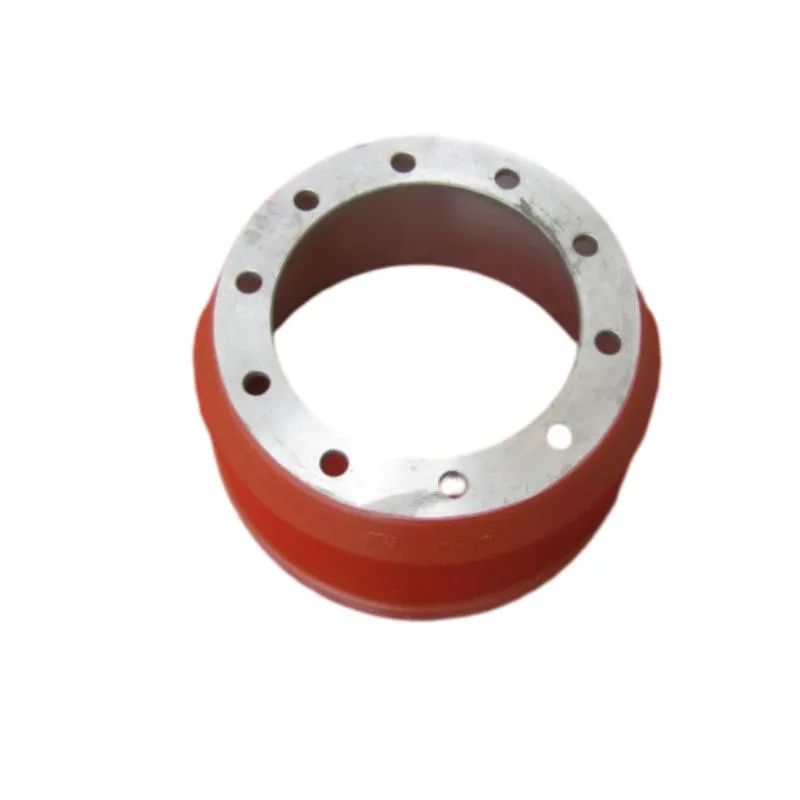
The structural design of Brake Drum fully embodies the wisdom of engineering
Semi brake drums are usually made of high-strength gray cast iron or ductile iron, which have good wear resistance and thermal stability, and can withstand the high temperature and friction generated during the braking process. The Brake Drum has a hollow drum shaped structure, with brake shoes installed inside and connected to the wheels through the hub on the outside. In the design of drum wall thickness, engineers optimize it based on the vehicle's load and usage scenarios, ensuring that it can provide sufficient braking force while avoiding an increase in vehicle weight due to excessive thickness. In addition, the surface of the Brake Drum has undergone special precision processing to ensure a tight fit with the brake shoes and improve braking effectiveness.
The working principle of Brake Drum is clever and efficient
When the driver steps on the brake pedal, the pressure of the brake fluid is transmitted through the brake pipeline to the brake wheel cylinder inside the electric drum brakes. The wheel cylinder piston pushes the brake shoes outward to tightly adhere to the inner wall of the brake drum. The huge frictional force generated between the two quickly converts the kinetic energy of the wheels into thermal energy, thereby achieving vehicle deceleration or parking. This braking method has a simple structure, low manufacturing cost, and relatively easy maintenance, and is widely used in various commercial vehicles, economical passenger cars, and some special vehicles.
In terms of performance, Brake Drum exhibits many advantages
Its powerful braking torque can meet the braking needs of heavy-duty vehicles, especially in scenarios such as large trucks and buses that require frequent braking and high load braking. Electric trailer brake drums provide stable and reliable braking force through extensive frictional contact. Moreover, Brake Drum has good sealing performance, which can effectively prevent dust, mud, and other impurities from entering the brake system, reduce component wear, and extend service life. In addition, due to the fact that the Brake Drum is wrapped inside the wheels, it experiences less external impact and has higher structural stability, reducing the risk of brake failure caused by external collisions.
With the rapid development of automotive technology, Brake Drum is also constantly innovating
The application of new composite materials, such as the combination of ceramic based composite materials and alloy materials, significantly improves the high temperature resistance and wear resistance of semi trailer brake drums, effectively reducing thermal degradation phenomena. The upgrade of surface treatment technology enhances the surface hardness and corrosion resistance of Brake Drum through coating processes. At the same time, intelligent monitoring technology is beginning to be integrated into the Brake Drum system, with sensors that can monitor parameters such as temperature and wear of the Brake Drum in real time, providing a more comprehensive guarantee for the safe operation of vehicles.
As an important component of the automotive braking system, Brake Drum has become a solid support for ensuring driving safety with its exquisite structural design, efficient working principle, outstanding performance, and continuous technological innovation. Whether in the braking field of traditional fuel vehicles or new energy vehicles, Brake Drum occupies a place with its own advantages. In the future, as the automotive industry develops towards intelligence and lightweighting, Brake Drum will continue to optimize and upgrade, providing better performance to safeguard people's travel safety.
Brake Drum FAQs
What is the main function of Brake Drum?
Brake Drum is the core component of drum braking system, which achieves vehicle deceleration through the friction between internal brake shoes and drum walls. Its compact cylindrical structure is particularly suitable for vehicles with limited space, such as small cars or commercial vehicles with rear wheels.
Why is the design of Brake Drum called "compact"?
Brake Drum integrates all components such as brake shoes and springs into a closed drum cavity, occupying much less space than the caliper and disc combination of disc brakes, making it suitable for areas with strict installation space requirements.
What are the advantages and disadvantages of the compact design of Brake Drum?
Advantages: Space saving, low manufacturing cost, and enclosed structure for dust and dirt prevention; Disadvantages: Poor heat dissipation, prone to thermal attenuation during long-term braking, commonly seen in low load wheel positions.
Which car models will prioritize using Brake Drum?
Economy sedans with rear wheels, light trucks, or older models often use Brake Drum due to its compactness and low cost, which can meet basic braking needs while simplifying chassis layout.
Why are modern cars gradually reducing the use of Brake Drum?
Despite its compact structure, its heat dissipation and braking efficiency are not as good as disc brakes. With the increasing demand for performance and safety, disc brakes have become more mainstream, but Brake Drum is still being used in cost sensitive or low load scenarios.
-
Premium Nissan Qashqai Brake Drum Guide for Safety and Performance
სიახლეებიApr.16,2026
-
Choosing the Best High Quality Nissan Pickup Brake Drum for Safety
სიახლეებიApr.09,2026
-
Comprehensive Guide to Nissan Patrol Brake Drum Maintenance and Replacement
სიახლეებიApr.07,2026
-
Comprehensive Guide to Nissan Versa Brake Drums Function and Replacement
სიახლეებიApr.04,2026
-
Comprehensive Guide to Nissan Cube Brake Drum Function and Replacement
სიახლეებიMar.31,2026
-
Comprehensive Guide to Nissan Brake Drums Performance and Maintenance
სიახლეებიMar.28,2026
 English
 Afrikaans
 Albanian
 Amharic
 Arabic
 Armenian
 Azerbaijani
 Basque
 Belarusian
 Bengali
 Bosnian
 Bulgarian
 Catalan
 Cebuano
 Corsican
 Croatian
 Czech
Czech
 Danish
 Dutch
Dutch
 Esperanto
 Estonian
 Finnish
 French
 Frisian
 Galician
 German
 Greek
Greek
 Gujarati
 Haitian Creole
 Hausa
Hausa
 Hawaiian
 Hebrew
 Hindi
Hindi
 Miao
Miao
 Hungarian
 Icelandic
 Igbo
Igbo
 Indonesian
 Irish
Irish
 Italian
 Japanese
 Javanese
 Kannada
 Kazakh
 Khmer
Khmer
 Rwandese
 Korean
 Kurdish
 Kyrgyz
 Lao
Lao
 Latin
Latin
 Latvian
 Lithuanian
 Luxembourgish
 Macedonian
 Malgashi
 Malay
Malay
 Malayalam
 Maltese
 Maori
Maori
 Marathi
 Mongolian
 Myanmar
 Nepali
 Norwegian
 Norwegian
 Occitan
 Pashto
 Persian
 Polish
 Portuguese
 Punjabi
 Romanian
 Russian
 Samoan
 Scottish Gaelic
 Serbian
 Sesotho
 Shona
Shona
 Sindhi
 Sinhala
 Slovak
 Slovenian
 Somali
 Spanish
 Sundanese
 Swahili
 Swedish
 Tagalog
 Tajik
Tajik
 Tamil
Tamil
 Tatar
Tatar
 Telugu
 Thai
Thai
 Turkish
 Turkmen
 Ukrainian
 Urdu
Urdu
 Uighur
 Uzbek
Uzbek
 Vietnamese
 Welsh
Welsh
 Bantu
Bantu
 Yiddish
 Yoruba
 Zulu
Zulu
 Georgian