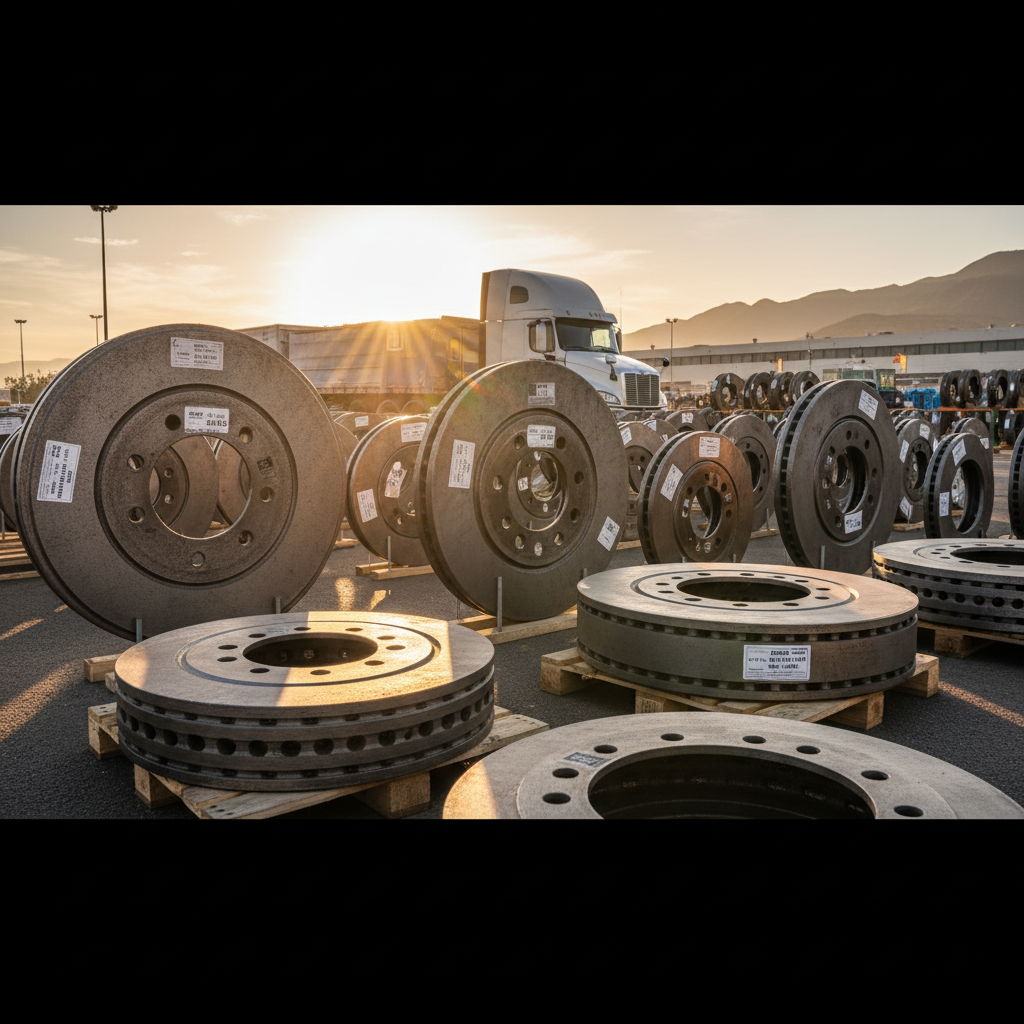
The 3687 brake drum stands as a critical component in the mechanical braking systems of heavy-duty machinery and industrial vehicles, ensuring safety and operational stability under extreme loads. In the realm of metal tool manufacturing, the precision of such a component determines the efficiency of deceleration and the overall lifespan of the braking assembly, making it a cornerstone of industrial safety standards globally.
Understanding the engineering behind the 3687 brake drum is essential for fleet managers and maintenance engineers who aim to reduce downtime and prevent catastrophic mechanical failure. By focusing on metallurgical integrity and thermal dissipation, this specific drum model addresses the high-friction demands of modern industrial transport.
From a global perspective, the standardization of parts like the 3687 brake drum allows for seamless cross-border maintenance and supply chain reliability. Whether utilized in mining operations in Australia or construction sites in Europe, the consistency in its dimensions and material grade ensures that safety is never compromised by regional variations.


The global demand for high-performance braking components has surged as industrial logistics expand. According to ISO standards for automotive and heavy-machinery parts, the reliability of the 3687 brake drum is paramount in reducing road accidents and industrial mishaps. As tonnage increases in global transport, the stress placed on friction surfaces necessitates a shift toward more resilient casting methods.
Currently, the industry faces a significant challenge: the balance between weight reduction and thermal mass. A 3687 brake drum that is too light may warp under heat, while one that is too heavy increases fuel consumption. This delicate engineering balance is what separates premium industrial drums from generic alternatives, directly impacting the operational cost of large-scale logistics.
For heavy-duty industrial use, a 3687 brake drum should be inspected every 10,000 to 15,000 miles, or every 6 months, whichever comes first. Inspection should focus on the inner diameter for "ovality" and the surface for heat cracks. Regular monitoring prevents catastrophic failure and ensures that the braking distance remains within safety specifications.
Yes, if the wear is minimal and the drum remains above the manufacturer's minimum thickness threshold, a 3687 brake drum can be turned on a lathe to restore a smooth surface. However, excessive machining reduces the thermal mass of the drum, which can lead to faster overheating and a shorter overall lifespan.
The most common signs include audible screeching, excessive vibration during braking (brake chatter), or a "spongy" feel in the brake pedal. Visually, deep grooves or blue-tinted areas (indicating extreme overheating) on the 3687 brake drum surface are clear indicators that the component has reached the end of its safe operational life.
Absolutely. Higher-grade alloyed 3687 brake drums maintain a more consistent coefficient of friction at high temperatures compared to standard cast iron. This prevents "brake fade," ensuring that the stopping distance remains consistent even during prolonged braking on steep declines, which is critical for heavy-load safety.
While disc brakes offer better cooling, the 3687 brake drum provides superior torque and stopping power for low-speed, high-load applications. Drums are also better protected from external debris in mining and construction environments, making them the preferred choice for the most rugged industrial use cases.
To ensure quality during international procurement, companies should source from manufacturers who provide ISO certifications and material mill test reports. Ensuring the 3687 brake drum meets the specific regional safety standards (such as DOT or ECE) is essential for legal compliance and operational safety across different borders.
The 3687 brake drum is far more than a simple metal casting; it is a high-precision engineering solution that balances thermal management, material durability, and operational safety. By selecting the correct material grade and adhering to strict maintenance schedules, industrial operators can significantly enhance the reliability of their fleets, reduce long-term costs, and ensure the highest standards of workplace safety.
Looking forward, the evolution of the 3687 brake drum toward smarter, more sustainable materials will continue to drive efficiency in the metal tools and automotive sectors. We encourage fleet managers to move toward predictive maintenance and high-alloy components to stay ahead of the curve in industrial safety. Visit our website for more professional parts: www.jkxyihang.com

 Afrikaans
 Albanian
 Amharic
 Arabic
 Armenian
 Azerbaijani
 Basque
 Belarusian
 Bengali
 Bosnian
 Bulgarian
 Catalan
 Cebuano
 Corsican
 Croatian
 Czech
Czech
 Danish
 Dutch
Dutch
 Esperanto
 Estonian
 Finnish
 French
 Frisian
 Galician
 Georgian
 German
 Greek
Greek
 Gujarati
 Haitian Creole
 Hausa
Hausa
 Hawaiian
 Hebrew
 Hindi
Hindi
 Miao
Miao
 Hungarian
 Icelandic
 Igbo
Igbo
 Indonesian
 Irish
Irish
 Italian
 Japanese
 Javanese
 Kannada
 Kazakh
 Khmer
Khmer
 Rwandese
 Korean
 Kurdish
 Kyrgyz
 Lao
Lao
 Latin
Latin
 Latvian
 Lithuanian
 Luxembourgish
 Macedonian
 Malgashi
 Malay
Malay
 Malayalam
 Maltese
 Maori
Maori
 Marathi
 Mongolian
 Myanmar
 Nepali
 Norwegian
 Norwegian
 Occitan
 Pashto
 Persian
 Polish
 Portuguese
 Punjabi
 Romanian
 Russian
 Samoan
 Scottish Gaelic
 Serbian
 Sesotho
 Shona
Shona
 Sindhi
 Sinhala
 Slovak
 Slovenian
 Somali
 Spanish
 Sundanese
 Swahili
 Swedish
 Tagalog
 Tajik
Tajik
 Tamil
Tamil
 Tatar
Tatar
 Telugu
 Thai
Thai
 Turkish
 Turkmen
 Ukrainian
 Urdu
Urdu
 Uighur
 Uzbek
Uzbek
 Vietnamese
 Welsh
Welsh
 Bantu
Bantu
 Yiddish
 Yoruba
 Zulu
Zulu
 English